I had the opportunity to attend the Consumer Electronics Show (CES) this year for the first time.
Cat had a display there as well for the first time, showcasing our remote control and autonomous machine technology. CES is a show I have wanted to attend for a long time as I like leading edge technology and electronics. Here are a few highlights I found interesting. There was of course many other products and areas at the show not covered here.
It was interesting how much of a presence automotive and machinery companies had at a consumer electronics show. These products are integrating more leading edge technology all the time. There was a large presence of companies working on autonomy and robotics across many industries there. The automotive sector had most of the West Hall and much of the North Hall as well. There were many companies showcasing electric vehicle charging, solar power, home backup power, and companies expanding their existing battery ecosystems to other products.
One company, Greenworks, who makes mostly battery powered lawn and yard care tools, is expanding into electric bikes using their existing battery ecosystem.
Now you can leverage the battery you already own for your lawn more and drop it into you ebike. One interesting thing about their ebikes is they use their 80V battery. Most ebikes using 36V or 48V but having that higher voltage is more efficient and can deliver more power with current motors available in the industry. There were several other ebike companies there as well.
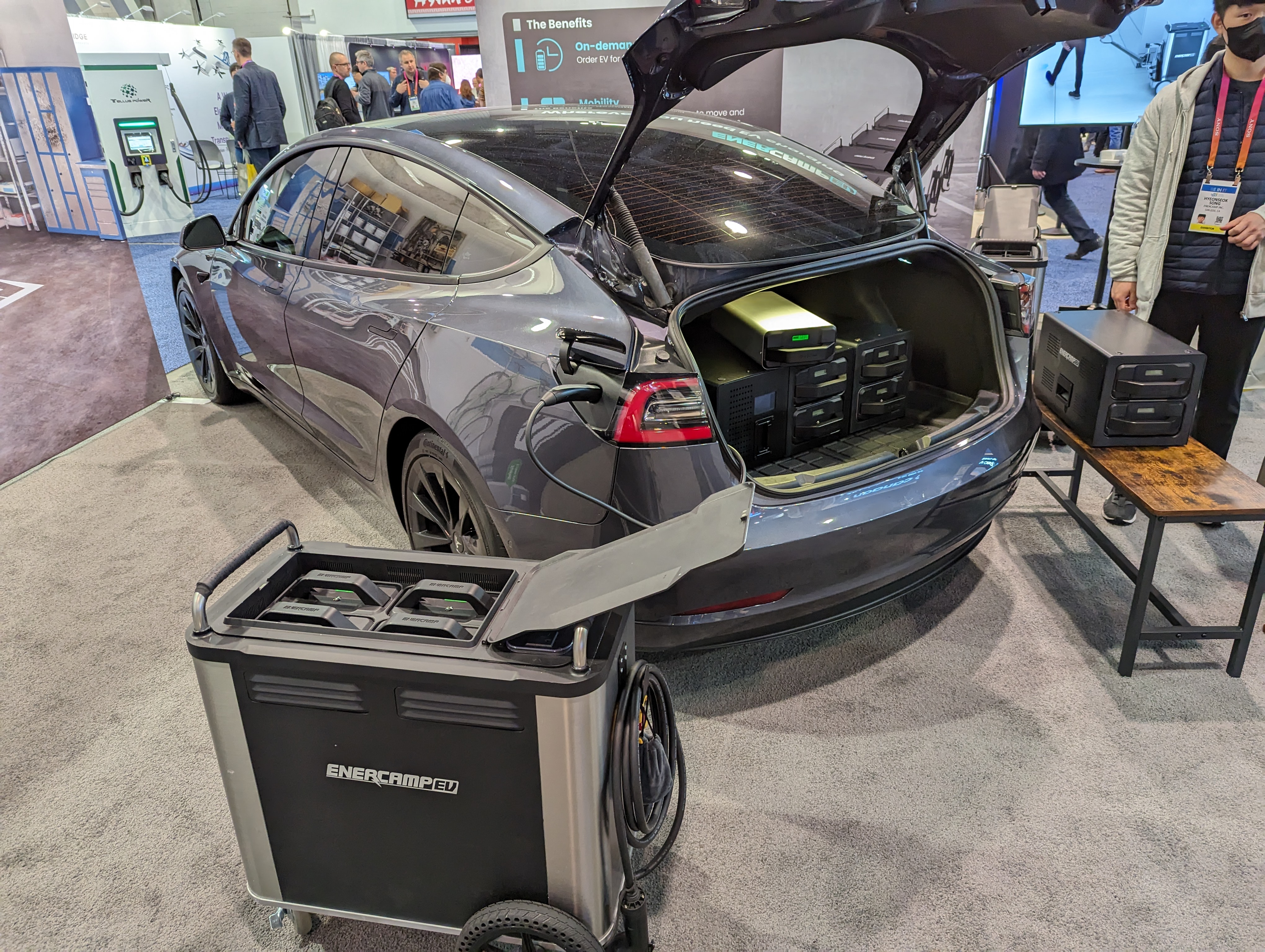
There were several companies showcasing power products such as portable solar systems and battery packs. One such company,
Enercamp, had a modular system that was primarily used for fast charging EV's with a lower power source. You could charge up the battery pack on a 110V outlet and then use this pack to fast charge your EV. It also had a 240V outlet you could use for home backup power in the event of a power outage. It also have a vehicle mount system so you could carry a bank of batteries with you to eliminate range anxiety for EVs.
In the smart home area, there were several companies showcasing their wireless power delivery solutions. These system can send low power (like 1W) to wireless sensors to keep them charged so they never need battery replacement. This could be a great way for things like the Moen smart sprinkler sensors to stay changed, if Moen ever intergraded this in.
Speaking of Moen's smart sprinkler system, it looks pretty slick. Instead of a simple timer, it closes the loop on actual soil moisture and weather forecast.
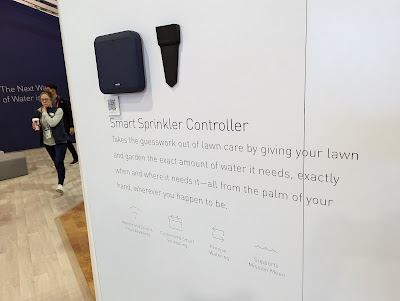
While systems like this have been around for a while, most were very expensive and from companies that come and go. Moen has a great chance to finally mainstream this technology. As drought has gripped the West, these systems will make more sense all the time. Even more so, places like Illinois that have varying rainfall that can at times fulfil or exceed your irrigation needs, but at other times need to irrigate it will also make sense. We had a home in Illinois that was on 0.6 acres. We would often get adequate rain through about June before really needing to water at all. July through September could have dry spells where we did need to water. A simple rain sensor did of course help but did not really cover it. Our soil was very rich and retained the water well. We could get a 1" rain and that would often be good for more than a week even in hot weather. Irrigation in Illinois was very expensive too. Some months when we did water we would have $300 or higher water bills. A system like Moen's could easily pay for itself in months there.
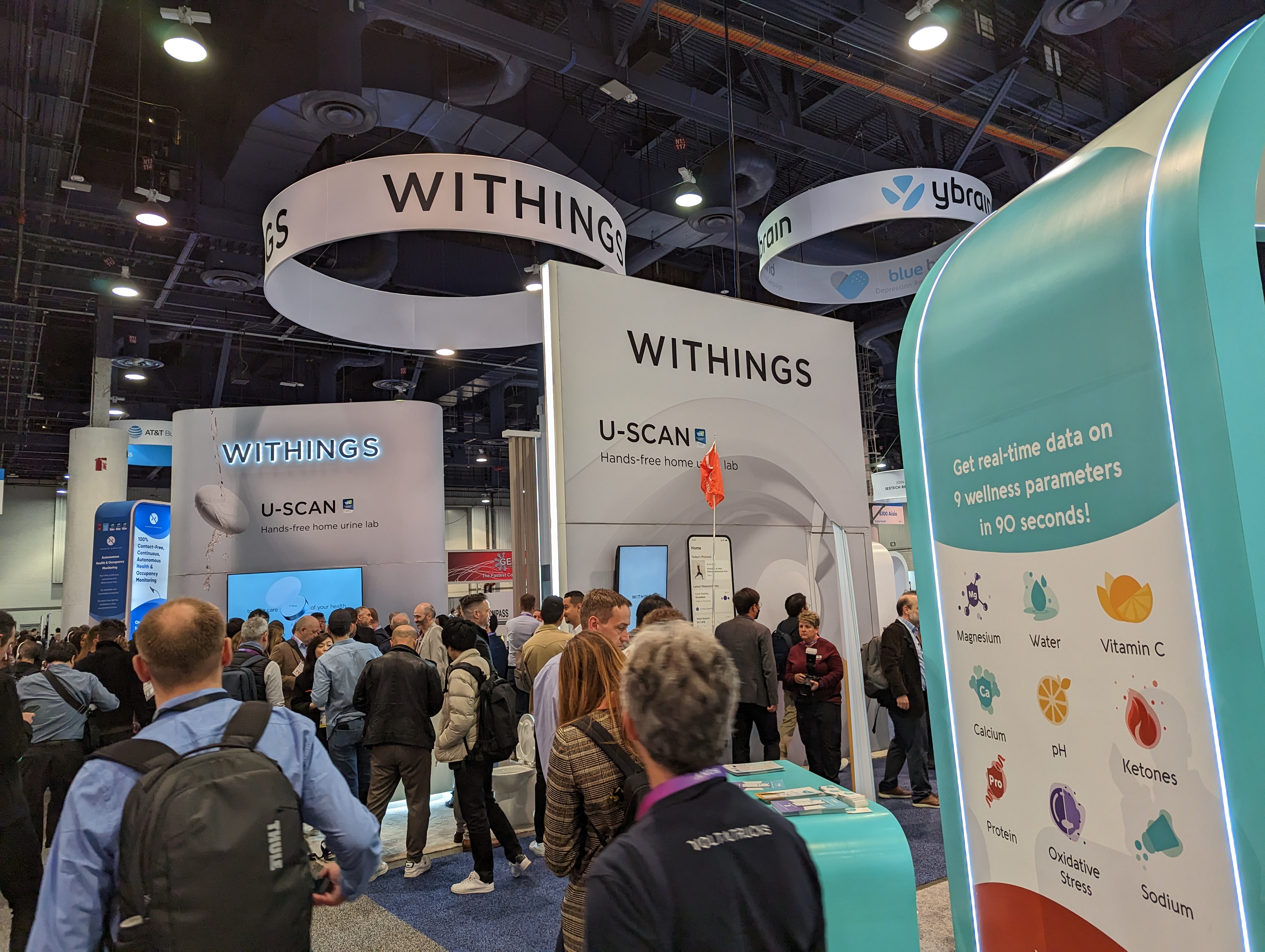
There were many new products in the health monitoring space. Some include: sensors in the toilet to monitor health, fitness and health tracker watches, rings, and beds. Optical trackers for your sleep monitoring. A glucose meter that used a laser to get the blood sample instead of a needle. In addition, there were systems to enable more home health monitoring and care.
There was of course much more but these were a few things I found interesting.